As a French Bulldog owner, you’re probably aware that your pet’s coat is one of its most distinctive features. But did you know that each of the seven recognized coat variations – from brindle to blue – comes with its own set of unique characteristics and grooming needs? Understanding what makes your Frenchie’s coat tick is essential to keeping them looking and feeling their best. By grasping the specific requirements of your pet’s coat type, you’ll be better equipped to provide the gentle care and attention they need to thrive. But which products, tools, and techniques are right for your Frenchie?
Understanding Frenchie Coat Types
As you bring your French Bulldog home, you’ll notice their unique coat, which can vary in two main types: brachy and short-haired. But have you ever wondered where this distinctive coat originated from? Delving into the breed’s history, you’ll discover that French Bulldogs were first bred in England in the 19th century as a toy version of the Bulldog. Their short, easy-to-maintain coat was a result of selective breeding, making them a popular companion dog.

The brachy coat type, characterized by a short, smooth coat, is often associated with the original French Bulldog breed. On the other hand, the short-haired type has a slightly longer coat, with a more pronounced texture. Both coat types have their own unique charm, and understanding their origins can help you appreciate your Frenchie’s individuality. Coat mythology suggests that the breed’s unique appearance was influenced by its ancestors, the Molossus and the Pug. By understanding the breed’s history and coat types, you’ll develop a deeper connection with your pet and be better equipped to provide the care they need to thrive.
Brindle Coat Characteristics
As you examine your Frenchie’s brindle coat, you’ll notice the unique pattern variations that set it apart from other coat types. You might see a warm, red-tinted hue present throughout the coat, adding depth and richness to the overall appearance. Take a closer look, and you’ll notice that dark stripes are often dominant, creating a striking contrast that defines the brindle coat’s signature look.
Brindle Pattern Variations
You’ll notice that brindle Frenchies exhibit a unique striped pattern, with darker stripes overlaying a lighter base coat, resulting in a distinctive, tiger-like appearance. This striking coat variation is a result of Brindle Genetics, where the interaction of two types of melanin – eumelanin and pheomelanin – creates the striped effect. The Brindle History dates back to the early days of French Bulldog breeding, where breeders sought to create a unique and attractive coat pattern.
As you explore the world of brindle Frenchies, you’ll discover that the striped pattern can vary in intensity, width, and color. Some brindles have a more subtle, muted appearance, while others boast bold, vibrant stripes. You might notice that the stripes can be more pronounced on certain areas of the body, such as the back or legs. The brindle pattern can also be affected by other coat characteristics, such as white markings or piebald patches. By understanding the intricacies of brindle pattern variations, you’ll appreciate the unique beauty and charm of your Frenchie’s coat.
Red Tinted Hues Present
Among the diverse array of brindle coat characteristics, one striking feature is the presence of red-tinted hues, which add a warm, rich dimension to your Frenchie’s striped pattern. This unique aspect of their coat is a result of the interplay between Color Theory and Hair Genetics. The red tint is caused by the production of phaeomelanin, a type of melanin that’s responsible for red and yellow pigmentation. When combined with the eumelanin that produces black and dark brown colors, the result is a beautiful, multi-tonal brindle coat.
As you gaze at your Frenchie’s coat, you’ll notice that the red-tinted hues can vary in intensity, ranging from a deep, burnt orange to a lighter, golden red. This variation is due to the genetic factors that influence the production and distribution of melanin in their hair. Understanding the science behind your Frenchie’s coat can deepen your appreciation for their unique beauty. By recognizing the subtleties of their brindle pattern, you’ll develop a stronger bond with your pet and gain a new perspective on what makes them truly special.
Dark Stripes Dominant
As a French Bulldog owner, you’re likely familiar with the unique brindle coat pattern that’s a hallmark of the breed. Frequently, French Bulldogs with a brindle coat exhibit a dominant dark stripe pattern, where the black or dark brown stripes overpower the lighter hues, creating a striking visual contrast. This striking pattern is a result of genetic inheritance, where the genes responsible for the brindle pattern are passed down from parent to puppy.
The dark stripes’ dominant pattern is a reflection of the breed’s rich history, which dates back to the 19th century when French Bulldogs were first bred as companions. Their distinctive coat patterns were highly prized by breeders, who selectively bred for these unique characteristics. Today, the dark stripes’ dominant pattern is a beloved trait among Frenchie enthusiasts, adding to the breed’s charm and charisma. As you groom your French Bulldog, take note of the intricate pattern of dark stripes that dance across their coat – it’s a true marvel of genetic inheritance and breed history.
Fawn Coat Variations Explained
As you explore the world of French Bulldog coat variations, you’ll notice that fawn coats can range from a light cream to a rich, dark reddish-brown. You’ll also observe that fawn Frenchies often have a mask on their face, which can be accompanied by white markings that add to their unique charm. Now, let’s take a closer look at the nuances of fawn coats, including the rare red fawn shades that make these dogs truly stand out.
Fawn Coat Color Range
You’ll find that the fawn coat color range in French Bulldogs encompasses a wide spectrum of warm, earthy shades, from a light cream to a deep, rich red. This stunning variety is thanks to the unique genetics of the breed, where the interaction of two types of melanin – eumelanin and phaeomelanin – creates this remarkable color spectrum.

As you explore further into the world of fawn Frenchies, you’ll discover that each shade has its own distinct charm. The lighter fawns, with their creamy tones, exude a sense of warmth and approachability. On the other hand, the deeper, richer reds evoke a sense of luxury and sophistication. Research in color psychology suggests that our emotional responses to these colors are deeply ingrained, with warm shades like fawn often associated with feelings of comfort and relaxation, which is noteworthy.
Whether you’re a seasoned breeder or a proud Frenchie owner, understanding the intricacies of the fawn coat color range can deepen your appreciation for this beloved breed. By recognizing the genetic and psychological factors at play, you’ll gain a new level of admiration for the unique beauty of your furry companion.
Mask and White Markings
When it comes to fawn French Bulldogs, mask and white markings can add an extra layer of complexity and visual interest to their coat, with some dogs featuring a striking mask that accentuates their facial features. You might notice that some Frenchies have a small, rounded mask that covers their nose and mouth, while others have a more extensive mask that extends to their forehead and cheeks. The shape and size of the mask can greatly impact the overall appearance of your Frenchie’s face, making their facial features more pronounced or softening their expression.
In addition to the mask, white markings can also vary greatly with regard to pattern and extent. You might see a small white patch on the forehead, a blaze that runs down the nose, or even a full white collar around the neck. These marking patterns can add a touch of elegance or playfulness to your Frenchie’s appearance, making each dog truly unique. As you get to know your Frenchie’s coat, you’ll start to appreciate the intricate details that make their mask and white markings truly special.
Rare Red Fawn Shades
Beyond the classic fawn shades, rare red fawn variations can add an extra layer of sophistication and uniqueness to your French Bulldog’s coat, with their rich, deep tones evoking a sense of luxury and refinement. These rare genetics are a result of the complex interaction of genes that control melanin production, making each red fawn Frenchie truly one-of-a-kind.
Here are some fascinating facts about rare red fawn shades:
- Fawn History: Red fawn coats have been present in French Bulldogs since their early days as companions to lace workers in Nottingham, England.
- Genetic Rarity: The genetic combination that produces red fawn coats is relatively rare, making these Frenchies highly sought after.
- Tonal Variations: Red fawn coats can range from a deep, burnt orange to a lighter, golden red, each with its own unique charm.
- Coat Pattern: Red fawn coats often feature a distinctive mask and white markings, adding to their allure.
- Grooming Tips: To keep your red fawn Frenchie’s coat looking its best, use a gentle shampoo and conditioner, and avoid excessive bathing to prevent fading.
Pied Coat Patterns and Care
As a Frenchie owner, you’re likely familiar with the adorable, mottled coat pattern of Pied French Bulldogs. Pied French Bulldogs boast a unique, mottled coat pattern featuring patches of color on a white background, which requires regular grooming to prevent skin issues and accentuate their distinctive appearance. This unique coat pattern is a result of their Pied ancestry and Coat genetics, which influence the distribution of melanin in their fur. To keep your Pied Frenchie’s coat looking its best, you’ll need to commit to regular grooming sessions. This includes daily brushing to prevent matting and tangling, as well as regular bathing to keep their skin clean and healthy. Be sure to use gentle, pH-balanced products to avoid irritating their sensitive skin. With regular care and attention, your Pied Frenchie’s coat will remain healthy, shiny, and uniquely beautiful. By following these grooming essentials, you’ll be able to showcase your dog’s unique features and strengthen your bond with them.
Cream Coat Grooming Essentials
You’ll need to adapt your grooming routine to your Cream French Bulldog’s unique coat characteristics, which are defined by a warm, creamy hue and a smooth, fine texture. To keep their coat looking its best, you’ll want to focus on moisturizing routines that lock in hydration and prevent dryness.
Here are some essentials to add to your grooming routine:
- Brush their coat regularly to distribute natural oils and prevent matting
- Use a gentle, sulfate-free shampoo specifically formulated for French Bulldogs
- Apply a leave-in conditioner or coat serum to lock in moisture
- Bathe them every 4-6 weeks, or as needed, to prevent over-drying
- Keep an eye out for shedding seasons, when their coat may require extra attention to prevent matting and tangling
Isabelle Coat Color Secrets
While your Cream French Bulldog’s smooth coat requires gentle care, your Isabelle Frenchie’s unique, silvery-gray coat demands a different approach, with its own set of secrets to maintaining its characteristic luster. As an Isabelle Frenchie owner, you’re likely aware that this stunning coat color is a result of genetic inheritance, where the interaction of genes affects the production of melanin, responsible for the silvery-gray hue. To bring out the best in your Isabelle’s coat, you must understand that color intensity is key. A regular bathing routine with a gentle, pH-balanced shampoo will help maintain the coat’s natural oils and prevent dulling. Be sure to avoid harsh products, as they can strip the coat of its natural moisture, leading to a lackluster appearance. When towel-drying, gently blot excess moisture to prevent water spots, which can compromise color intensity. By following these tips, you’ll be able to showcase your Isabelle Frenchie’s breathtaking coat in all its glory.
Blue Coat Health Considerations
As a blue French Bulldog owner, you’re likely aware of the unique charm of this coat variation, but you should also be aware of the potential health considerations that come with it. You’ll want to pay close attention to your dog’s skin folds, as they can trap dirt and moisture, leading to skin issues if not cleaned regularly. Additionally, you’ll need to keep a watchful eye out for signs of eye infections, which are more common in blue Frenchies due to their facial structure.
Skin Fold Cleaning
As a French Bulldog owner, prioritizing skin fold cleaning is crucial for preventing skin infections. Every French Bulldog, regardless of coat color, has skin folds that require regular cleaning to prevent skin infections, but blue-coated Frenchies need extra attention due to their unique skin characteristics.
To keep your blue Frenchie’s skin healthy, you’ll want to focus on gentle cleansing and preventing moisture buildup. Clean your Frenchie’s skin folds daily, using a soft, damp cloth and a gentle cleanser. Dry the folds thoroughly to prevent moisture buildup. Use a cotton swab to clean hard-to-reach areas. Avoid using harsh chemicals or soaps, which can irritate your Frenchie’s sensitive skin. Consider using a skin fold cleanser specifically designed for French Bulldogs, as they are formulated to meet their unique skin needs.
Eye Infection Risks
You’ll need to be vigilant about monitoring your blue-coated French Bulldog’s eye health, since they’re more prone to eye infections due to their unique facial structure and tear duct anatomy. This increased risk is because their flat face and shallow eye sockets can cause tear ducts to become blocked, leading to moisture accumulation and bacterial growth. To minimize the risk of eye infections, you must follow proper eye care tips and infection prevention methods.
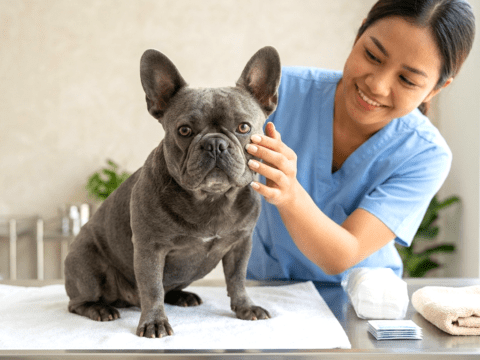
| Eye Care Tip | Infection Prevention Method |
|---|---|
| Clean your Frenchie’s eyes daily | Use a damp cloth to wipe away dirt and debris |
| Inspect for discharge or redness | Consult your vet if you notice any unusual signs |
| Trim hair around the eyes | Prevent hair from getting into the eyes and causing irritation |
| Schedule regular eye exams | Catch potential issues before they become serious
Merle Coat Patterns and Genetics
As a Frenchie owner, you’re likely familiar with the striking Merle coat patterns that have gained popularity in recent years. French Bulldog breeders and enthusiasts often marvel at the dramatic, mottled appearance of Merle coat patterns, which result from a complex interplay of genetics that influences the production and distribution of melanin in a Frenchie’s coat.
Merle patterns are the result of genetic inheritance, not cross-breeding with other breeds.
Merle Frenchies can have blue or dark eyes, and their noses can be pink or black.
The Merle gene can affect the production of melanin, leading to varying shades of gray, silver, or black.
Merle patterns can be combined with other coat variations, such as brindle or piebald.
Responsible breeding practices are vital to safeguard the health and well-being of Merle Frenchies, as they can be prone to certain health issues.
Grooming Tools for Frenchies
Your Frenchie’s coat requires regular maintenance to prevent skin issues and keep it looking its best, so you must prioritize investing in the right grooming tools. A high-quality brush is essential for Frenchies, as it helps to remove loose hair, distribute skin oils, and reduce shedding. Look for a brush with soft bristles and a comfortable grip, as this will make grooming sessions more enjoyable for both you and your Frenchie. During shedding seasons, which typically occur in spring and fall, you may need to brush your Frenchie more frequently to prevent matting and tangling. A slicker brush or a pin brush can be particularly effective during these periods. Additionally, consider investing in a detangling spray or conditioning treatment to help make the grooming process smoother and more manageable. By using the right grooming tools, you can keep your Frenchie’s coat looking healthy, shiny, and well-maintained.
Common Coat Issues and Solutions
French Bulldog owners often encounter common coat issues, such as dryness, brittleness, and skin fold dermatitis, which can be frustrating and uncomfortable for their pets, but understanding the underlying causes and adopting targeted solutions can help mitigate these problems.
As a Frenchie owner, you’re not alone in dealing with these coat issues. Here are some common problems you might encounter and their solutions:
- Dry, brittle coats: Use a humidifier to add moisture to the air, and incorporate omega-rich foods and supplements into your Frenchie’s diet to promote healthy skin and coat.
- Excessive shedding: Brush your Frenchie regularly to remove loose hair, and consider using a deshedding tool to reduce shedding.
- Skin fold dermatitis: Clean your Frenchie’s skin folds daily with a gentle cleanser, and dry them thoroughly to prevent moisture buildup.
- Coat discoloration: Feed your Frenchie a balanced diet rich in antioxidants, and consider adding a coat-enhancing supplement to their meals.
- Matting and tangling: Brush your Frenchie regularly, and use a detangling spray to make the process easier and less painful for your pet.
Frequently Asked Questions
Can French Bulldogs Be Born With a Natural Bobtail?
You might wonder if French Bulldogs can be born with a natural bobtail, but the answer lies in genetic testing, which reveals that breeding standards dictate that a naturally short tail, not a bobtail, is the norm for this breed.
Do Frenchies Shed More in Certain Climates or Seasons?
You’ll notice your Frenchie sheds more in humid climates and seasonal changes, thanks to their low humidity tolerance and weather sensitivity, so be prepared to adapt their grooming routine accordingly.
Are Frenchie Coats Affected by Their Diet and Nutrition?
You might’ve wondered if your Frenchie’s diet affects their coat, and the answer is yes. Food sensitivities and skin allergies can trigger inflammation, leading to dull, itchy coats, so it’s essential to monitor their nutrition and adjust accordingly.
Can I Use Human Hair Products on My French Bulldog?
You shouldn’t use human hair products on your French Bulldog, as they can trigger skin allergies; always check product labeling for dog-specific ingredients and consult with your vet to guarantee the best choice for your pup’s sensitive skin.
How Often Should I Bathe My French Bulldog Puppy?
You should bathe your French Bulldog puppy every 2-3 weeks, as over-bathing can strip their sensitive puppy skin of natural oils, disrupting their bathing routine and causing dryness and irritation.
Conclusion
As you gaze into your Frenchie’s eyes, their unique coat shines like a work of art, a masterpiece that requires your tender care. With every brush stroke, nail trim, and ear clean, you’re crafting a canvas of health and beauty. By embracing your Frenchie’s individual coat type, you’re weaving a tapestry of love and devotion. As you tend to their every need, their coat radiates with vibrancy, a symbol of the unbreakable bond between you and your loyal companion.